
Introduction
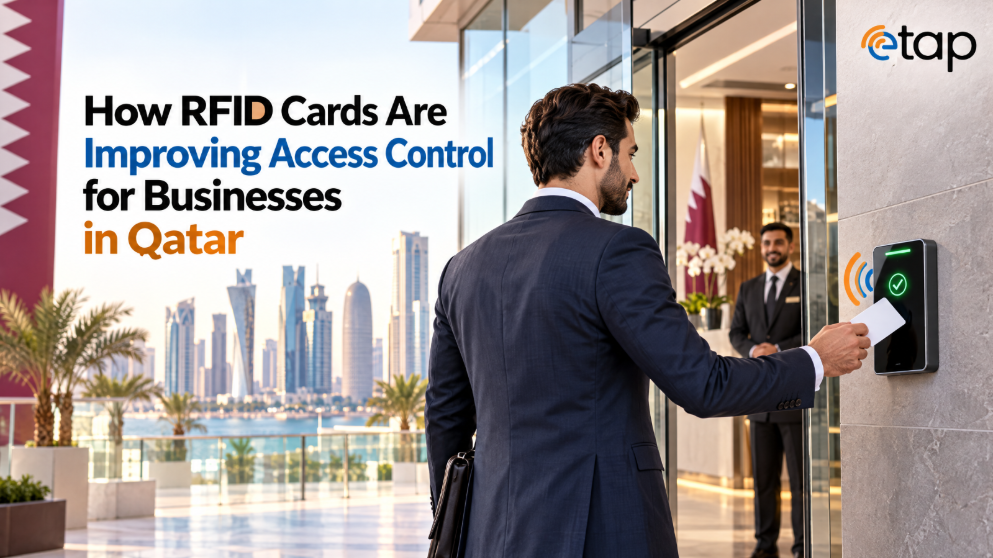
As businesses in Qatar grow, managing access to offices, residential buildings, hotels, schools, and other facilities becomes increasingly important. Traditional keys can be misplaced, copied, or difficult to manage when employees change roles. RFID cards offer a practical alternative by allowing authorized users to access compatible systems with a simple tap or presentation of a card. Radio-frequency identification (RFID) uses radio waves to transfer information between a card and a reader. The system checks the credential against configured permissions and allows or denies access. The result is a convenient way to manage entry without relying entirely on physical keys.
What Is an RFID Access Card?
An RFID access card contains a small electronic chip and antenna inside a card body. Depending on the card and system, it may use low-frequency, high-frequency, or another RFID technology. The reader and access-control software must support the card’s technology and security features, so compatibility should be confirmed before ordering cards in bulk. RFID cards are commonly used for employee entry, visitor management, membership access, and selected building or facility systems. They can also be printed with a name, photograph, department, company logo, or other identification details, combining access functionality with visual identification.
Benefits for Offices and Facilities
One advantage of RFID cards is convenience. Staff can carry a card rather than manage a separate key for every controlled door. Depending on the installed system, administrators may be able to activate, change, or revoke credentials through access-control software. RFID can also support more consistent access policies. Employees can be granted access to the areas required for their jobs, while visitors may receive temporary credentials. In facilities with many users, centralized management can make it easier to maintain records and respond when a card is lost. Security still depends on the complete system—not just the card. Businesses should consider reader security, permissions, audit logs, lost-card procedures, and system maintenance.
Choosing the Right Card
Before selecting RFID cards, identify the reader model and technology already installed. Check the required frequency, card format, authentication requirements, and whether the system needs a specific credential format. Cards that look similar may not work with the same reader. Next, consider the physical environment. Cards used daily should be durable enough for frequent handling. If they also function as employee IDs, choose a design that keeps names and photographs legible while preserving space for company branding. Testing a small batch with the actual readers before a large order can help prevent compatibility problems.
RFID Cards and Employee Identification
Many organizations combine access credentials with employee identification. A clearly designed ID card helps colleagues, security teams, customers, and visitors recognize staff members. When the card is connected to an access-control system, it can serve two purposes: identification and controlled entry. However, printing an ID card does not automatically grant secure access. The card must be encoded or registered correctly in the relevant system, and permissions must be configured by an authorized administrator. Organizations should have a clear process for replacing lost or damaged cards and deactivating credentials when employees leave.
A Practical Starting Point for Qatar Businesses
For companies planning a new system or refreshing existing credentials, start with a short requirements list: how many users need cards, which doors or areas are controlled, what reader technology is installed, and whether cards need printed identification. Confirm technical compatibility with the access-control provider before production. Businesses exploring card options can review etap’s RFID cards for access control and discuss the required specifications before ordering. For teams that also need visible staff identification, etap’s PVC employee ID cards may be relevant as part of a coordinated card program.
Conclusion
RFID cards can make access management more convenient and scalable for organizations in Qatar. Their value comes from matching the right card technology to the installed readers, configuring permissions carefully, and maintaining reliable administrative processes. With those foundations in place, RFID cards can support smoother entry, clearer identification, and more organized facility management.